Weekly Tips
What Does a High-Tech Grower Actually Do in Controlled Environment Agriculture?
A high-tech grower is responsible for optimizing crop production using data, technology, and plant science within controlled environment agriculture (CEA). The role goes far beyond traditional growing, combining climate control, irrigation strategies, and real-time data analysis. This article breaks down exactly what a high-tech grower does on a daily, strategic, and technical level.
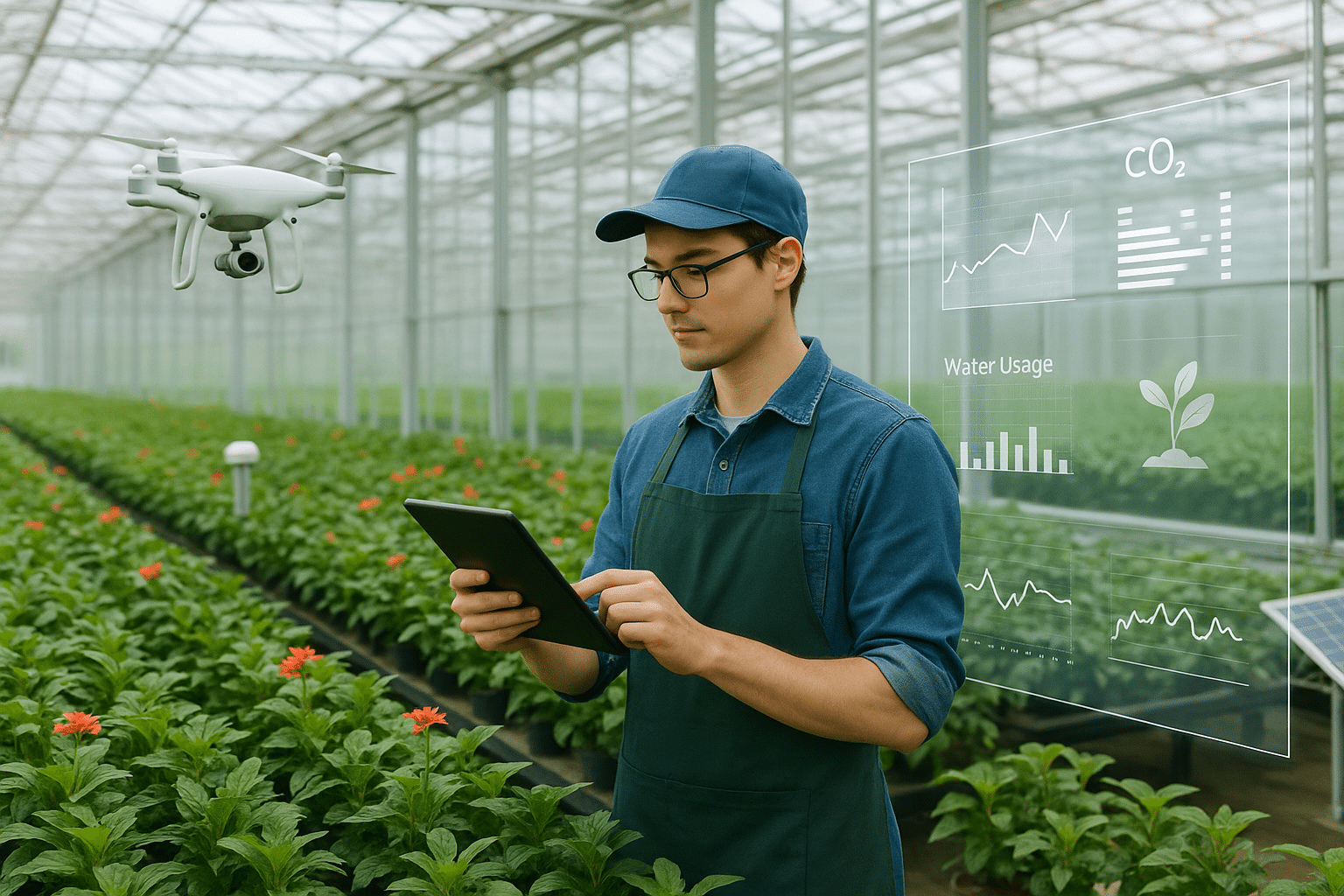
What does a high-tech grower actually do?
A high-tech grower manages and optimizes plant growth by controlling environmental conditions, irrigation, and crop strategy using data-driven systems.
Core responsibilities include:
- Managing climate control systems (temperature, humidity, CO₂, VPD)
- Designing irrigation and fertigation strategies
- Applying crop steering techniques
- Monitoring plant performance through data and sensors
- Adjusting LED grow lighting strategies
“A high-tech grower controls the environment to control the plant.”
How does a high-tech grower use climate control systems?
A high-tech grower continuously adjusts climate parameters to create optimal growing conditions for each crop stage.
This includes:
- Temperature management (day/night balance)
- Humidity and VPD optimization
- CO₂ dosing strategies
- Ventilation and energy screen control
Systems often used:
- Priva
- Hoogendoorn
“Climate is not a setting—it is a dynamic strategy.”
What is crop steering and why is it important?
Crop steering is the process of influencing plant behavior (vegetative vs. generative growth) through environmental and irrigation adjustments.
A grower steers crops by:
- Adjusting irrigation timing and volume
- Managing substrate moisture levels
- Controlling light intensity and duration
- Monitoring plant signals and data feedback
This allows:
- Higher yields
- Better fruit quality
- More predictable production
“Crop steering turns growing into a controlled, repeatable system.”
How data-driven is the role of a high-tech grower?
The role is highly data-driven, with decisions based on real-time sensor data and historical performance analysis.
Typical data sources:
- Climate sensors (temperature, RH, CO₂)
- Substrate sensors (EC, moisture content)
- Plant measurements
- Yield and production data
Growers use this data to:
- Detect trends early
- Optimize performance
- Reduce risks
“Modern growers manage spreadsheets and dashboards as much as plants.”
What technologies do high-tech growers work with?
High-tech growers work with advanced greenhouse and vertical farming technologies to control and optimize the growing environment.
Key technologies:
- Greenhouse automation systems
- Irrigation and fertigation systems
- LED grow lighting systems
- Climate computers
- Data dashboards and analytics tools
These technologies enable:
- Precision growing
- Scalability
- Consistency across production cycles
“Technology enables precision, but the grower makes it effective.”
What skills are required to be a high-tech grower?
A high-tech grower needs a combination of agronomic, technical, and analytical skills to perform effectively.
Essential skills:
- Knowledge of plant physiology
- Experience with CEA systems and automation
- Strong data interpretation skills
- Problem-solving mindset
- Ability to make real-time decisions under pressure
“The best growers combine biology, technology, and data into one role.”
How is a high-tech grower different from a traditional grower?
A high-tech grower relies on systems, data, and controlled environments, while a traditional grower relies more on manual observation and external conditions.
Key differences:
- Controlled vs. open-field environments
- Data-driven vs. experience-driven decisions
- Automation vs. manual processes
“High-tech growing replaces uncertainty with control.”
FAQ
These frequently asked questions provide quick insights into the role, responsibilities, and value of high-tech growers in modern agriculture.
A high-tech grower is a specialist who manages crop production using technology, data, and controlled environments to optimize yield and quality.
High-tech growers are mainly employed in greenhouses, vertical farms, and other controlled environment agriculture operations.
Yes, the role is highly technical and requires knowledge of systems, data analysis, and plant science.
Data is essential, as most decisions are based on real-time and historical data analysis.
Yes, with additional training in technology and data-driven growing, traditional growers can transition into high-tech roles.
Internal Link Suggestions
- “Why is it so difficult to find high-tech greenhouse growers?”
- “How to reduce time-to-hire in greenhouse recruitment”
- “Why HTG Recruitment was founded”
- “Hiring strategies for vertical farming companies”
Conclusion
A high-tech grower plays a critical role in modern agriculture by combining plant science, technology, and data to optimize crop production. As controlled environment agriculture continues to scale, the importance of this role only increases. Companies that understand the complexity of the position are better equipped to hire, manage, and retain the right talent. Ultimately, high-tech growers are the key to making advanced agricultural systems perform at their full potential.
Building better teams, driving better careers.
Success is built on the right connections. Whether you are scaling your organization with top-tier talent or looking for a career-defining new challenge, we provide the expertise and network to make it happen. Let’s discuss how we can support your growth and help you navigate today’s competitive market.