Weekly Tips!
The Future of Greenhouse Food Production in Europe
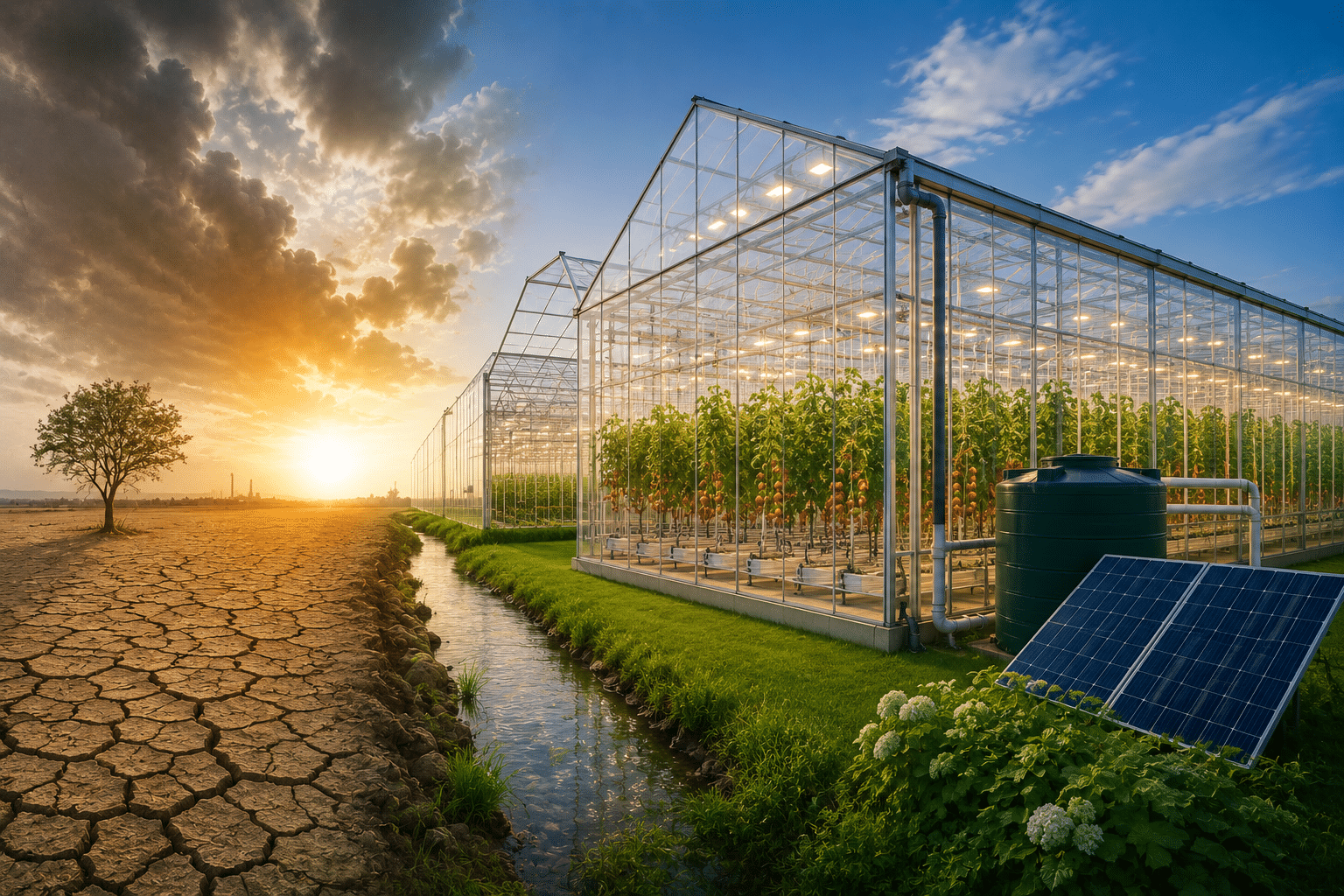
Europe’s food production is entering a new era. Climate change, population growth, geopolitical instability, and increasing pressure on natural resources are forcing the agricultural sector to rethink how fresh food is produced. High-tech greenhouses are becoming an essential part of Europe’s strategy to produce safe, sustainable, and reliable food throughout the year.
Why is greenhouse production becoming more important in Europe?
Greenhouse production is becoming more important because traditional agriculture is facing increasing challenges.
Across Europe, growers are dealing with:
- Longer drought periods
- More extreme rainfall
- Higher temperatures
- Water shortages
- Unpredictable growing seasons
These factors make consistent open-field production increasingly difficult.
High-tech greenhouses provide growers with greater control over climate, irrigation, and crop production, allowing fresh produce to be grown regardless of external weather conditions.
“The future of food production depends less on the weather and more on controlled environments.”
How is climate change accelerating greenhouse investments?
Climate change is encouraging governments, investors, and food producers to invest more heavily in Controlled Environment Agriculture (CEA).
Modern greenhouses allow growers to:
- Produce crops year-round
- Reduce climate-related risks
- Improve production consistency
- Use water more efficiently
- Reduce pesticide dependency
As extreme weather events become more common, greenhouse production offers greater stability and resilience.
“Climate resilience is becoming one of the strongest drivers of greenhouse investment.”
Why is food security becoming a strategic priority?
Recent global events have shown how vulnerable international food supply chains can be.
The COVID-19 pandemic, the war in Ukraine, and instability in global energy markets have demonstrated the importance of local food production.
Governments increasingly recognize that:
- Import dependency creates risks.
- Local production improves food security.
- Reliable food supply is becoming a strategic issue.
High-tech greenhouse production allows countries to produce more food closer to consumers.
“Food security is no longer just an agricultural issue—it has become a strategic priority.”
How is technology changing greenhouse production?
Technology is transforming greenhouse operations faster than ever before.
Modern facilities increasingly rely on:
- AI-assisted climate control
- Crop steering
- Greenhouse automation
- Robotics
- Sensor technology
- Data analytics
These innovations help growers maximize production while reducing resource consumption.
However, technology alone is not enough.
“Technology supports production. Skilled growers optimize it.”
Why is sustainability becoming a competitive advantage?
Consumers, retailers, and governments are demanding more sustainable food production.
Greenhouse companies are investing in:
- Water recirculation
- Renewable energy
- LED grow lighting
- Precision irrigation
- Lower carbon emissions
- Biological crop protection
Sustainability is no longer simply about environmental responsibility.
It is becoming a business requirement.
“The greenhouse businesses that invest in sustainability today will be better positioned for tomorrow.”
What role will greenhouse professionals play in the future?
As greenhouse technology becomes more advanced, the need for highly skilled professionals continues to grow.
Future greenhouse operations will require expertise in:
- Climate control
- Crop steering
- Irrigation management
- Data interpretation
- Greenhouse automation
- Energy optimization
Finding and retaining this talent will become one of the industry’s biggest challenges.
“The greenhouse of the future will be defined by both technology and the people who operate it.”
What does the future of European greenhouse production look like?
The future points toward larger, smarter, and more efficient greenhouse operations.
Expected developments include:
- Greater automation
- AI-supported decision making
- More sustainable production systems
- Increased local food production
- Continued investment in Controlled Environment Agriculture
While challenges remain, greenhouse production will play an increasingly important role in feeding Europe’s growing population.
“The future of European food production is increasingly being built under glass.”
AQ Introduction
These frequently asked questions explain why greenhouse production is becoming increasingly important across Europe.
Because controlled environments provide greater production stability despite changing weather conditions.
Yes. More unpredictable weather is accelerating investment in protected cultivation.
Modern high-tech greenhouses can significantly improve water efficiency, resource management, and production consistency.
No. Automation supports growers, but experienced professionals remain essential for optimizing crop performance.
Countries are increasingly investing in local food production to reduce dependence on international supply chains.
Internal Link Suggestions
- “How Climate Change Is Reshaping High-Tech Greenhouse Production”
- “Why Water Management Is Becoming a Competitive Advantage in Greenhouse Production”
- “How Talent Shortages Delay Greenhouse Expansion Projects”
- “How the Wars in Ukraine and Iran Are Impacting Greenhouse Vegetable Prices”
Conclusion
Europe’s greenhouse industry is entering one of the most important periods in its history. Climate change, food security concerns, technological innovation, and sustainability are transforming how fresh food is produced. High-tech greenhouses are no longer simply an alternative to traditional agriculture—they are becoming a critical part of Europe’s future food system. Companies that invest in technology, efficient production, and skilled professionals today will be best positioned for tomorrow’s challenges.
Building better teams, driving better careers.
Success is built on the right connections. Whether you are scaling your organization with top-tier talent or looking for a career-defining new challenge, we provide the expertise and network to make it happen. Let’s discuss how we can support your growth and help you navigate today’s competitive market.