How the Wars in Ukraine and Iran Are Impacting Greenhouse Vegetable Prices
The wars in Ukraine and Iran have significantly impacted the economics of greenhouse vegetable production across Europe. While greenhouse growers are not directly involved in these conflicts, they are heavily affected by rising energy costs, fertilizer prices, and supply chain disruptions. Understanding these impacts is becoming essential for greenhouse owners looking to remain competitive and profitable.
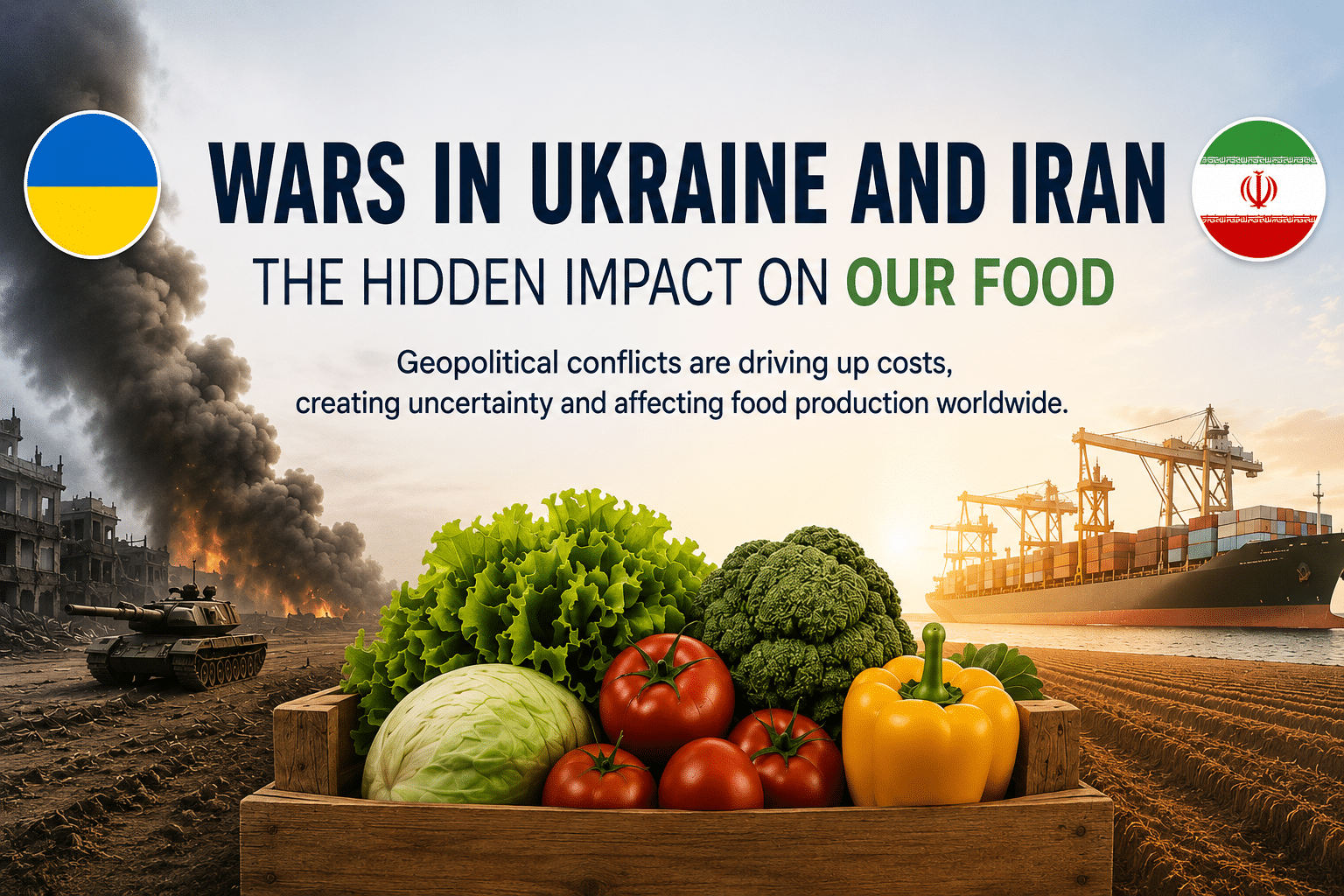
How did the war in Ukraine affect greenhouse vegetable prices?
The war in Ukraine fundamentally changed Europe’s energy market, increasing production costs for greenhouse growers across the continent.
Before the invasion, Europe relied heavily on Russian natural gas. As supplies declined and markets adjusted, energy prices surged, directly impacting greenhouse operations.
For greenhouse growers, this meant:
- Higher heating costs
- Increased electricity prices
- More expensive supplemental lighting
- Reduced winter production in some regions
“The Ukraine war transformed energy from a cost factor into a strategic business risk.”
Why does the conflict involving Iran affect greenhouse growers?
The conflict involving Iran has created additional pressure on global energy markets, leading to higher oil and gas prices worldwide.
Disruptions around the Strait of Hormuz and concerns about LNG supplies have increased uncertainty in energy markets. Europe remains vulnerable because it now depends more heavily on global LNG imports after reducing its dependence on Russian gas.
As a result:
- Gas prices increased
- Transportation costs rose
- Operational expenses became less predictable
“Greenhouse profitability is increasingly linked to geopolitical stability.”
Why do energy prices matter so much in high-tech greenhouses?
Energy is one of the largest operational costs for many greenhouse operations.
Energy is required for:
- Heating
- Climate control
- LED grow lighting
- CO₂ systems
- Irrigation infrastructure
When gas prices increase, the cost of producing tomatoes, cucumbers, peppers, and other greenhouse crops rises immediately. Recent energy market disruptions linked to the Iran conflict have already pushed gas prices higher in Europe.
“Every increase in energy costs directly impacts the cost per kilogram of produce.”
How have fertilizer prices been affected?
Both conflicts have contributed to higher fertilizer costs.
The war in Ukraine disrupted agricultural supply chains, while broader geopolitical instability has increased pressure on energy-intensive fertilizer production.
Consequences include:
- Higher growing costs
- Reduced margins
- Increased pressure on production efficiency
For growers, this means every operational decision becomes more important.
“When input costs rise, operational mistakes become more expensive.”
Why are vegetable prices becoming more volatile?
Vegetable prices are becoming more volatile because growers are operating in a less predictable economic environment.
Factors contributing to volatility include:
- Fluctuating energy prices
- Supply chain disruptions
- Rising transportation costs
- Weather-related production challenges
Food industry experts increasingly warn that geopolitical instability is contributing to greater uncertainty in food production and pricing.
“The challenge is no longer just producing vegetables—it is producing them profitably.”
How does this increase the value of experienced growers?
Periods of rising costs increase the importance of operational excellence.
Experienced high-tech growers can:
- Optimize climate strategies
- Reduce energy consumption
- Improve irrigation efficiency
- Increase yield consistency
- Identify problems before they become costly
As margins tighten, operational expertise becomes one of the strongest competitive advantages available to greenhouse businesses.
“During periods of high costs, the best growers often create more value than new technology investments.”
What should greenhouse owners focus on moving forward?
Greenhouse owners should focus on efficiency, resilience, and talent.
Key priorities include:
- Energy optimization
- Data-driven growing
- Recruitment of experienced growers
- Automation where appropriate
- Risk management strategies
The companies that adapt fastest will be best positioned to handle future market disruptions.
“The future of greenhouse profitability depends on efficiency, not just production volume.”
FAQ Intro
These frequently asked questions explain how geopolitical events influence greenhouse vegetable production and pricing.
Wars often impact energy markets, transportation costs, and fertilizer availability, all of which influence greenhouse production costs.
Energy-intensive crops such as tomatoes, cucumbers, peppers, and lit winter crops are often the most affected.
Heating, lighting, and climate control are major operational expenses in modern greenhouse operations.
Yes. Skilled growers can optimize climate strategies, improve efficiency, and reduce waste.
As long as geopolitical instability and energy market uncertainty continue, price volatility is likely to remain elevated.
Internal Link Suggestions
- “Why Data-Driven Growers Outperform Traditional Growers”
- “Why Hiring International Growers Is Becoming Essential”
- “The Biggest Operational Risks of Being Understaffed in a Greenhouse”
- “Why Technical Talent Is Becoming the Biggest Bottleneck in CEA”
Conclusion
The wars in Ukraine and Iran have reshaped the economics of greenhouse production across Europe. Rising energy costs, fertilizer prices, and supply chain disruptions have increased production costs and market uncertainty. While growers cannot control geopolitical events, they can control how efficiently their operations respond. In today’s environment, operational excellence and experienced talent have become more valuable than ever.
Building better teams, driving better careers.
Success is built on the right connections. Whether you are scaling your organization with top-tier talent or looking for a career-defining new challenge, we provide the expertise and network to make it happen. Let’s discuss how we can support your growth and help you navigate today’s competitive market.